Binary-prediction-of-smoker-status
Binary Prediction of Smoker Status
Project Overview
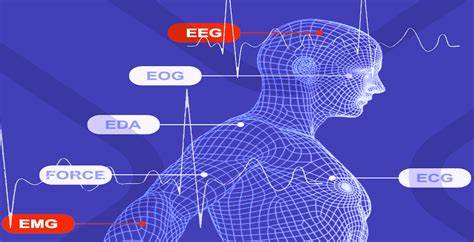
This project focuses on developing a binary classification model to predict a patient’s smoking status based on various health indicators or bio-signals nsuch as EEG, ECG, EDA, EMG etc. The goal is to utilize these features to accurately classify whether a patient is a smoker or not.
Dataset Description
The dataset used in this project was generated from a deep learning model trained on the “Smoker Status Prediction using Bio-Signals” dataset. While the feature distributions in this dataset are close to, but not exactly the same as, the original dataset, it offers a valuable opportunity for model development and evaluation.
Dataset Details
- Train and Test Sets: The dataset is divided into training and test sets. The training set is used to train the model, while the test set is used to evaluate its performance.
- Features: The dataset includes various health indicators or bio-signals that are used to predict smoking status.
- Original Dataset: You may also use the original dataset for further exploration and to assess whether incorporating it into the training process improves model performance.
Objective
The primary objective of this project is to build a binary classification model that predicts a patient’s smoking status. The model will be trained using the provided dataset and evaluated based on its accuracy and effectiveness in distinguishing between smokers and non-smokers.
Citation
- Authors: Walter Reade, Ashley Chow
- Year: 2023
- Title: Binary Prediction of Smoker Status using Bio-Signals
- Source: Kaggle
- Link: Kaggle Competition
Methodology
- Data Preprocessing: Clean and preprocess the dataset to handle missing values, normalize features, and split the data into training and test sets.
- Feature Engineering: Extract relevant features from the bio-signals and health indicators that may be predictive of smoking status.
- Model Selection: Experiment with various binary classification algorithms (e.g., Logistic Regression, Random Forest, Gradient Boosting) to find the most effective model.
- Evaluation: Assess model performance using metrics such as accuracy, precision, recall, and F1-score. Use cross-validation to ensure robustness.
- Model Tuning: Fine-tune model parameters to improve performance based on evaluation metrics.
Installation
To get started with this project, clone the repository and install the necessary dependencies:
git clone https://github.com/yash-raj202134/Binary-prediction-of-smoker-status.git
cd Binary-prediction-of-smoker-status
pip install -r requirements.txt
Now execute:
python app.py